 ◄ BACK
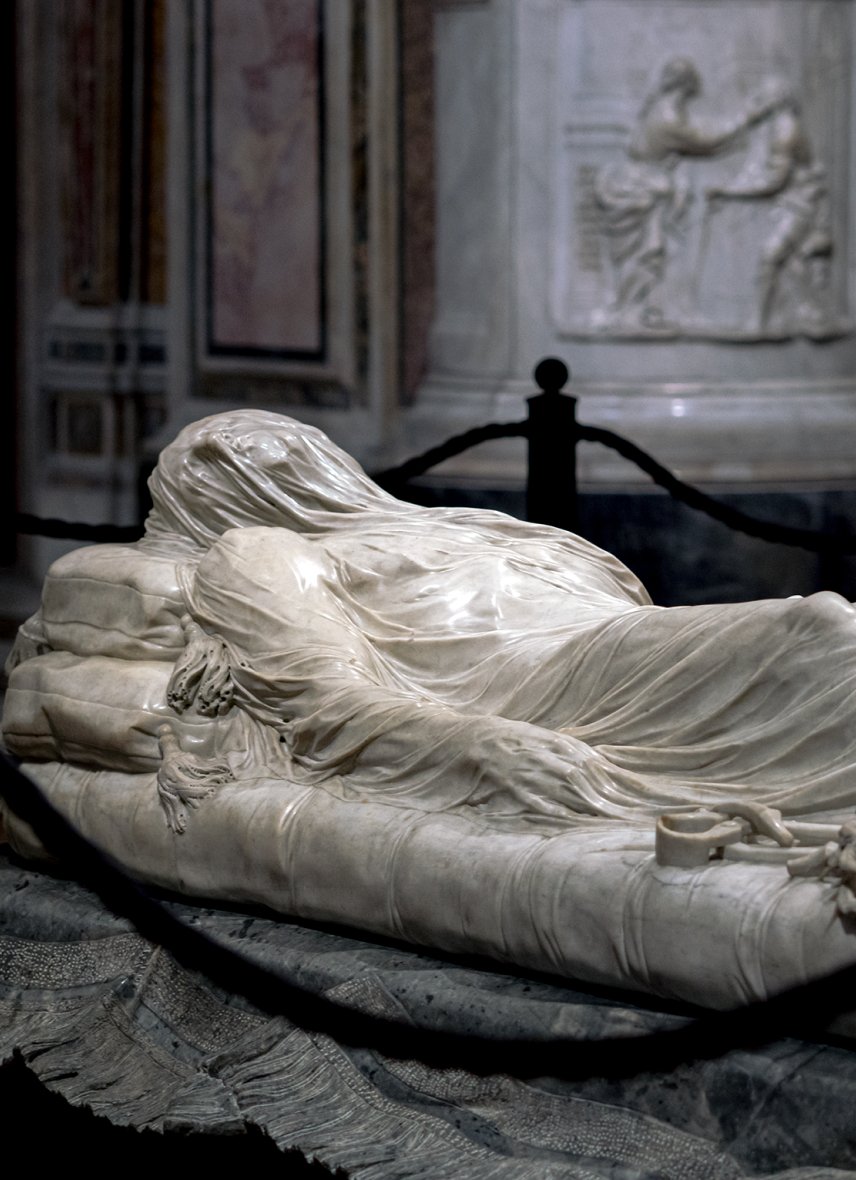
[cover: Veiled Christ, sculpture by Giuseppe Sanmartino, 1753 — Sansevero Chapel, Naples (Italy).]


The story of an artistic masterpiece
Sansevero prince, Raimondo di Sangro, commissioned a life-size statue of Jesus covered by a transparent shroud.
The work should have been designed by the sculptor Antonio Corradini, who died prematurely and left just a small terracotta draft, now kept at the Museum of San Martino.
The sculpture was carried out in 1753, by the Neapolitan artist Giuseppe Sanmartino, who managed to perform a work of rare beauty.
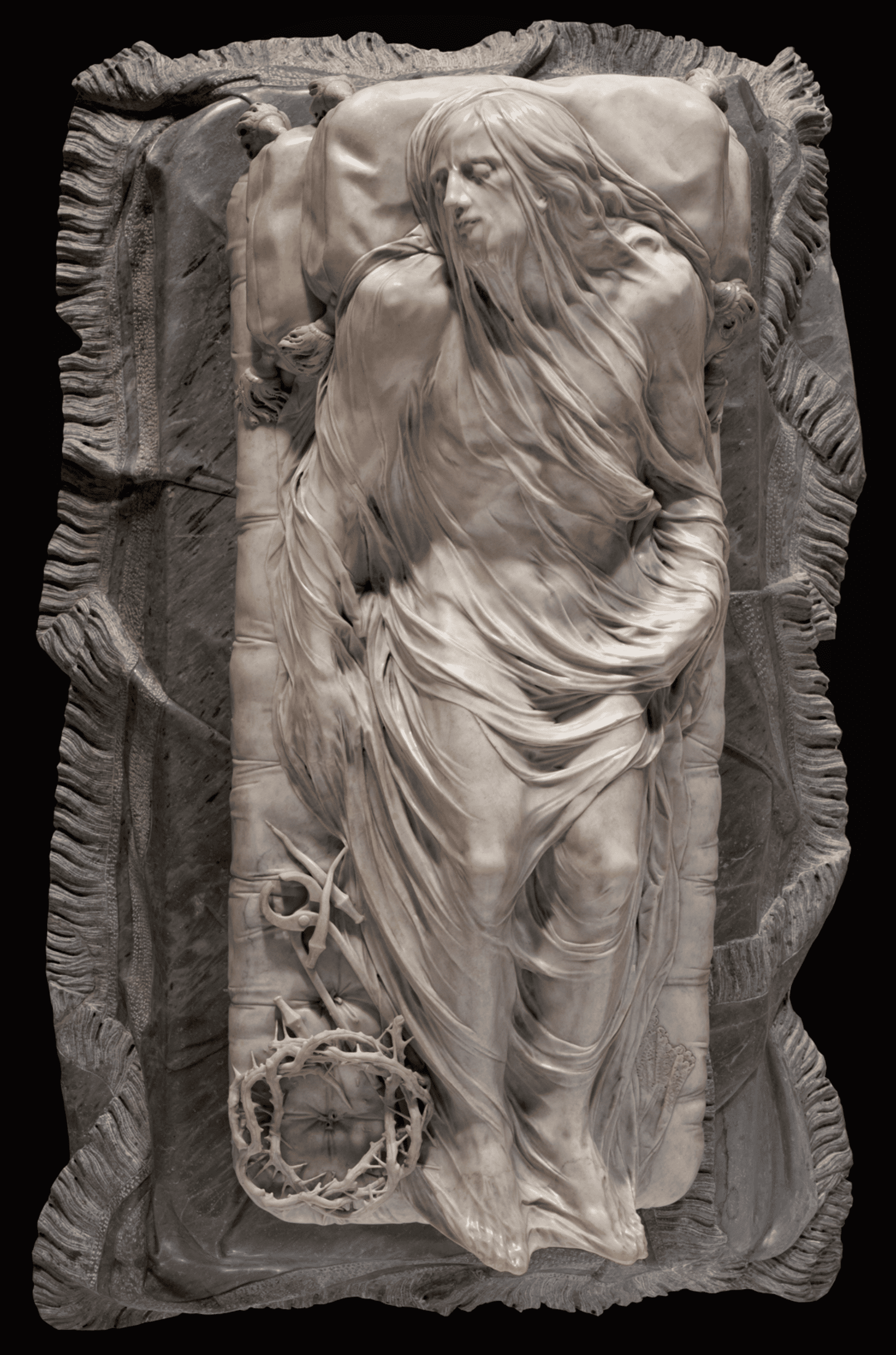
A life-size Jesus laying down on a bed, covered by the shroud, the head between to pillows; the crown of thorns and the spikes taken away from the cross at his feet.
The statue owns an evocative and touching power, but the marble veil is what makes it the artistic masterpiece well-known across the board and analysed by many art historians: it seems like soft fabric, highlighting each and every muscle of Christ.
Legends
It has been exactly the marble veil and its mysterious creation to pave the way for a whole series of legends about the sculpture, the chapel and its eccentric owner, Sansevero prince.
Among the most narrated stories, the most famous one is certainly the legend according to which the prince, scientist and alchemist, had taught the artist Giuseppe Sanmartino how to marble a piece of cloth by means of an alchemical process.
This would mean that the veil is not marble, but the result of a calcification of the cloth in marble cystals.
The legend has raised no little curiosity, so that it has even roused research about the art commission.
A payment receipt in favour of the artist for the making of the veil “to be made from marble and that will cover Our Lord” is kept within the Historical Archive of Banco di Napoli.
Although it is known that the veil is made of marble, the Veiled Christ statue is always able to instil some doubts because of the perfect creation and for the mystic atmosphere of the place.
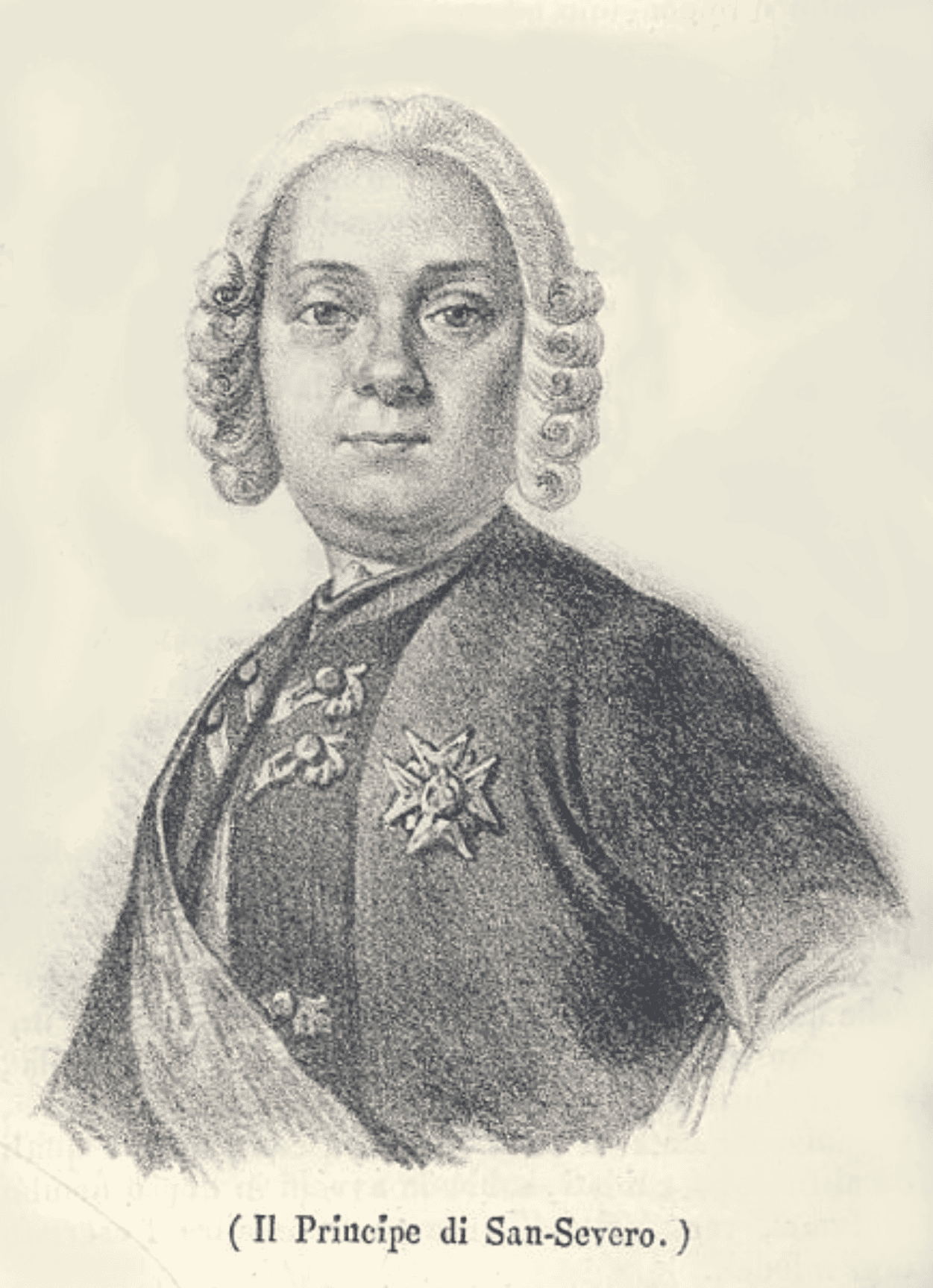
Raimondo di Sangro, 7th prince of Sansevero (Torremaggiore, January 30, 1710 - Naples, March 22, 1771), was an Italian esotericist, inventor, anatomist, military man, alchemist, Freemason, scholar and academic. An extremely eclectic and multifaceted personality, Raimondo di Sangro was a prolific inventor, giving birth to numerous inventions in the most disparate fields of science and the arts, from chemistry to hydrostatics, from typography to mechanics, and achieving results that appeared prodigious to his contemporaries. Also known by antonomasia as the Prince, Raimondo's name is inextricably linked to the Sansevero Chapel, the family mausoleum that he enlarged and embellished by collecting typically Baroque statues, of which the most significant exponent is the celebrated Veiled Christ.


Energy Follows Thought